
When ABM works well, sales cycles shorten, outreach is more relevant, and marketing and sales operate as a well-oiled team. But achieving those results takes more than investing in an intent data platform or building a target account list. The real advantage comes from turning buying signals into coordinated action. Intent data creates value only when it flows through your marketing automation, CRM, and sales workflows, enabling every team to engage the right accounts at the right time.
The biggest challenge isn’t collecting intent data. It’s putting that data to work. Many organizations have dashboards filled with buying signals and account insights, but those insights rarely translate into coordinated action. Marketing sees engagement. Sales sees another list of accounts. Without a shared operational process, valuable opportunities slip through the cracks.
Operationalizing ABM closes that gap. By connecting your marketing automation platform (MAP), CRM, and intent data, you can automate the handoff from insight to action. The result is a more coordinated, repeatable approach that helps marketing and sales engage the right accounts with the right message at the right time.
Identify the Right Signals (Not All Intent Is Equal)
Not all intent signals deserve equal attention. A single page visit is interesting, but repeated engagement across high-value topics is actionable. The goal is to prioritize consistency, relevance, and account fit, not sheer activity volume.
For example, an account repeatedly engaging with content around a specific product category, visiting high-value pages, and showing activity from multiple contacts is a stronger signal than a single page visit.
Think of this as superhero-approved discipline: more signals ≠ stronger intent. Strong intent is what earns an account the right to your team’s time.
Turn Intent Into Action With Marketo
Marketo is where intent data turns into action. Instead of relying on static lists, build dynamic segments that automatically update based on intent signals, firmographic data, and recent engagement. These segments shouldn’t just report on activity. They should drive it.
From there, automate targeted, intent-driven campaigns. For example, when a target account shows a surge in interest around a specific product category, Marketo can automatically enroll the account in a tailored nurture campaign while simultaneously alerting the appropriate SDR. Marketing and sales engage in parallel, delivering more relevant outreach when buying intent is highest.
Surface Buying Groups in Salesforce
Salesforce is where intent becomes visible to revenue teams. At the account level, map contacts to buying group roles such as decision-maker, influencer, champion, or technical evaluator. This shifts the focus from individual leads to the full buying committee.
B2B buying decisions often involve multiple stakeholders with different priorities. Surfacing buying groups helps revenue teams identify gaps in account coverage, engage more of the decision-making committee, and reduce the risk of deals stalling because key stakeholders were never involved.
When SDRs and AEs can see who is involved and which topics matter most, outreach becomes informed instead of intrusive. Context builds credibility and helps move opportunities forward.
Orchestrate Marketing and Sales Outreach Correctly
Alignment is where a great ABM strategy either shines or stalls. Marketing kicks off the play, SDRs start the conversation, and AEs carry it forward. But that only works when timing, context, and messaging are aligned.
For example, Marketing can launch the play when intent reaches a defined threshold. SDRs receive the account context and recommended messaging, while AEs step in once meaningful buying group engagement is established.
Simple rules keep everyone moving in sync. Define when Marketing alerts an SDR, what messaging leads the conversation, and when the AE takes over. Weekly account check-ins help teams stay coordinated and maintain momentum without creating unnecessary processes.
What This Looks Like in Real Life
Here is an example of how intent signals can trigger a coordinated revenue play across Marketing and Sales:
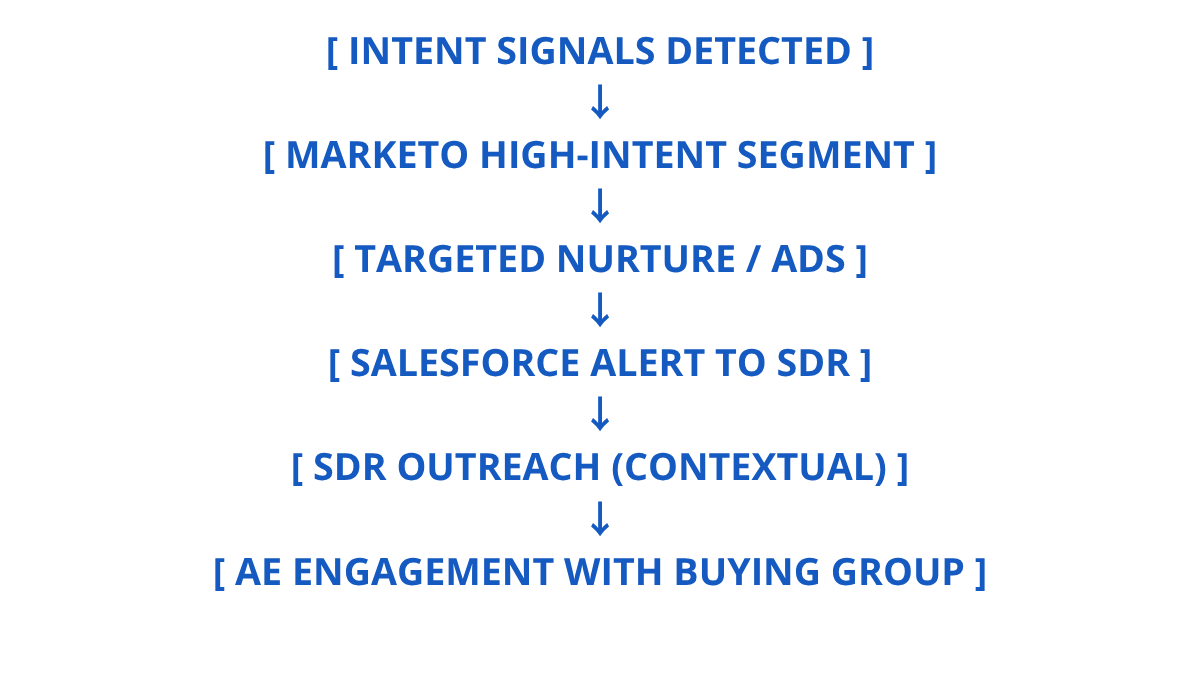
Instead of reacting to isolated activities, each team responds to the same buying signals at the right moment.
The Bottom Line
A successful ABM strategy isn’t powered by intent data alone. It’s powered by the operational processes that turn intent into coordinated action. When marketing and sales work from the same signals, they can engage the right accounts with the right message at the right moment. That’s how intent data moves from insight to impact, helping teams create more meaningful engagement and accelerate revenue.
Ready to turn intent signals into coordinated revenue plays? Contact our team today to learn how we can help you operationalize ABM with the right strategy, technology, and execution.